Introduction
Refrigerator filters get chosen the same way in most homes: someone notices a light on the door, wonders what it means, and starts searching for a part number. The reasons behind that search are rarely the same, though. In one kitchen it’s a flat taste in the morning coffee. In another it’s a dispenser that has slowed to a trickle. In a third it’s simply the end of a six-month cycle that somebody finally remembered.
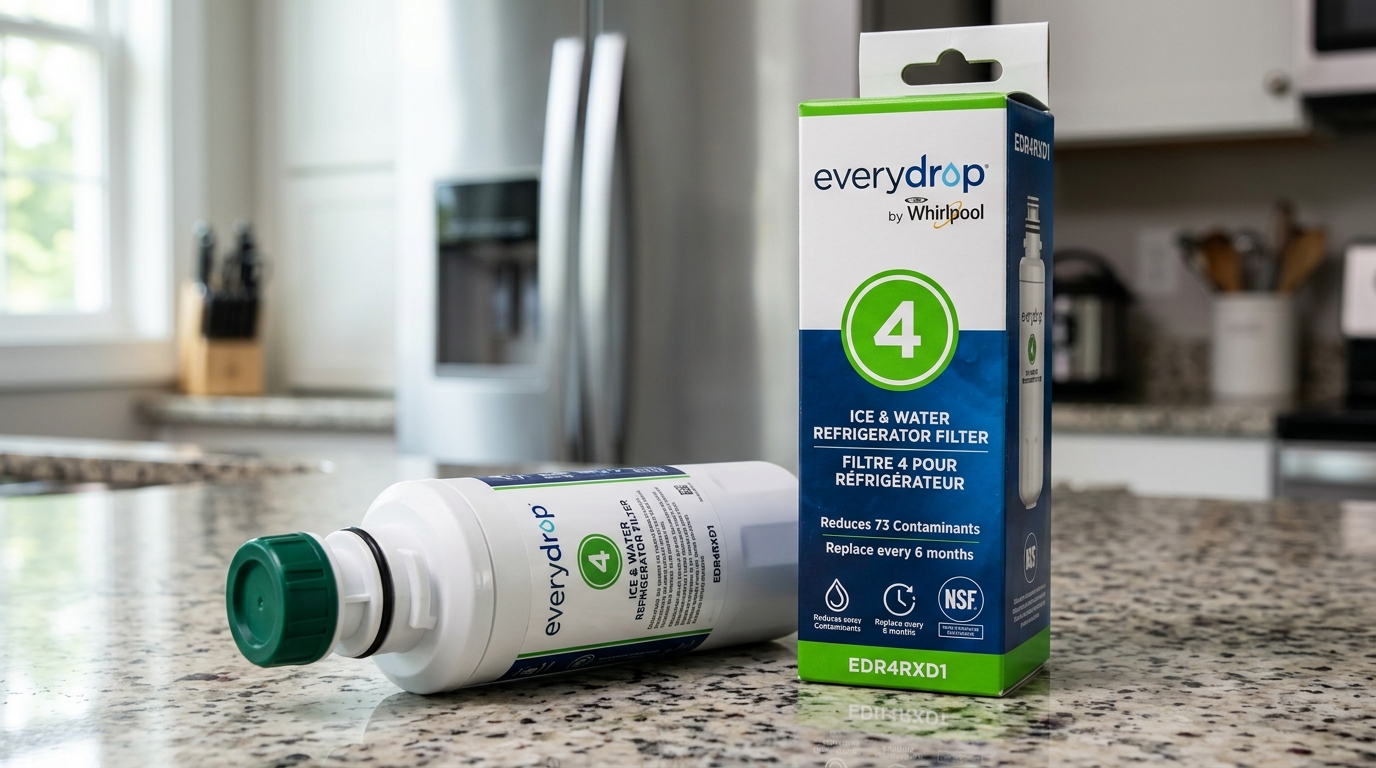
The EveryDrop by Whirlpool Ice & Water Refrigerator Filter 4, part number EDR4RXD1, is a green cartridge designed for refrigerators that call for “Filter 4.” It sits in the water line and helps reduce certain tastes, odors, and other substances in the water and ice the refrigerator supplies. Rather than listing its traits once and moving on, this guide looks at how a cartridge like this fits into three common kinds of households: a small apartment kitchen, a busy family home, and a home that entertains often. The scenarios are general illustrations of typical situations and are not accounts of real people or real experiences.
A note on approach. This is an informational article and not a review. No personal use of the product is being claimed. The explanations draw on how refrigerator water filters generally work and on the details publicly listed for this model. Your refrigerator’s owner’s manual and the manufacturer’s documentation are the authoritative sources for compatibility, certification, and replacement timing, so please treat this piece as background reading and the manual as the final word.
A refrigerator filter will never be the most exciting item on a shopping list, but it touches something people use constantly. Water from the door ends up in glasses, kettles, pots, pet bowls, and ice trays. Knowing what the cartridge does and what it can’t do makes it easier to maintain without overthinking it.
Key Features
What “Filter 4” Refers To
EveryDrop numbers its cartridges, and the “4” identifies a specific cartridge style along with the group of refrigerators designed to accept it. It isn’t a grade of filtration and it doesn’t mean “upgraded.” It works like a size code. A refrigerator that calls for Filter 4 expects this style of cartridge, and a refrigerator that calls for another number generally expects something different, even if the two look similar on a shelf.
The Part Number
EDR4RXD1 is the identifier for this cartridge, and it’s the most dependable string to use when comparing listings or checking against a manual. Product titles differ between sellers, but part numbers stay constant. Some manuals and older listings show earlier part numbers for cartridges later grouped under the EveryDrop naming, so if your manual lists a different code, the manufacturer’s compatibility lookup can show how they relate.
Activated Carbon Filtration
Like most refrigerator cartridges, this type relies on activated carbon. The material is porous and has a very large internal surface area for its size, which allows it to attract and hold certain substances as water passes through. It’s widely associated with reducing chlorine taste and odor, and depending on the specific design and testing, certain other substances as well. What a given cartridge reduces, and under what conditions, is documented in its performance data.
Testing and Certification
Cartridges in this category are commonly tested against voluntary NSF/ANSI standards, which describe what a filter can reduce under controlled test conditions. The packaging and the manufacturer’s data sheet list which standards apply and which substances were tested. If a specific concern matters to you, that documentation is the dependable place to check.
Supply to the Dispenser and the Ice Maker
In refrigerators designed for this style of cartridge, the filter generally sits in the line that feeds the water dispenser and, in many models, the automatic ice maker. One cartridge therefore influences both the water you pour and the ice that drops into the bin.
Tool-Free Replacement
Cartridges of this type are designed for homeowner replacement without tools, and in many refrigerators without shutting off the water supply. The method varies by model. Some cartridges twist, others push in and lock, and the housing may be inside the compartment or in the base grille. The manual gives the right sequence for your refrigerator, and following it matters for getting a proper seal.
Green Branding
The green color is a branding choice that makes the cartridge easy to identify. It’s helpful when comparing a new box with an old cartridge, but color is not proof that two cartridges match.
Reminder Support
Many refrigerators designed for this style of cartridge track filter life by time or water volume and display a reminder. After a replacement, the indicator usually needs to be reset, and the manual explains how.
How Carbon Filtration Wears Down
Understanding what happens inside the cartridge makes the replacement schedule feel less arbitrary.
Water passes through a block of compressed activated carbon. As it moves through, certain compounds stick to the carbon’s surface and the block traps some fine particles. The filtered water continues to the dispenser and ice maker.
The carbon has a limited capacity. Its pores gradually fill with captured material, and the cartridge becomes less able to hold more. Importantly, water keeps flowing the whole time, so the dispenser can seem perfectly normal even as filtration performance declines. There is no sharp cutoff on a particular day. That is why manufacturers recommend a replacement interval, commonly around six months, instead of telling owners to wait for a failure.
Real-world conditions can shift that timeline. Sediment-heavy water, heavy use, or both can shorten a cartridge’s practical life. Light use can mean the six-month mark arrives before the cartridge is truly spent. The interval is a guideline, and the reminder light is the refrigerator’s way of helping owners follow it.
How It Can Be Used
Scenario One: The Small Apartment Kitchen
Picture a compact kitchen where the refrigerator came with the apartment and nobody is sure when the filter was last changed. The dispenser is used mostly for a glass of water in the morning and a few ice cubes in the evening, and the household is small, so usage is light.
In a situation like this, the six-month mark may arrive before the cartridge has seen much volume, and a timed reminder is the most practical guide. A sensible approach is to replace the cartridge at move-in to set a known starting point, write the date on it, and add a recurring entry to a calendar. Lighter use also means the household may be tempted to stretch the interval, which is worth resisting, since the cartridge’s materials don’t stop aging simply because less water passes through.
A small kitchen has another practical consideration: storage space. A single spare cartridge can live in a drawer or on a shelf, ideally in its original packaging, so it’s ready when the reminder appears.
Scenario Two: The Busy Family Home
Now picture a household with several people who fill water bottles, run the dispenser for cooking pots, and go through a good amount of ice. Usage is heavy, and the refrigerator is in constant use.
Here the cartridge works harder. Heavy water draw can bring the replacement date closer than the calendar suggests, especially if the local water carries sediment. A family in this situation might notice a slower dispenser or a change in taste before the reminder arrives, and replacing sooner is reasonable in that case. Keeping a spare on hand is more valuable here, since a busy household doesn’t want to wait for a delivery while the old cartridge declines.
Families also tend to have someone responsible for the routine. Writing the installation date on the cartridge and tying the change to a recurring household chore, such as the start of a season, makes the task easy to hand off.
Scenario Three: The Home That Entertains
Finally, picture a household that hosts regularly: gatherings, holiday meals, summer cookouts with coolers full of ice. Ice demand spikes at certain times of year, and the people drinking that water and eating that ice aren’t only the household’s own.
Because ice absorbs odors easily, an overdue cartridge can show up in the ice before it shows up in the water. A household like this might time a replacement ahead of a busy stretch so that fresh filtration is in place when demand is highest. That’s a matter of preference more than a rule, but it fits naturally into planning for a big event, alongside checking the refrigerator’s cleanliness and the ice bin.
Beyond the Scenarios: Common Everyday Uses
Replacing on a Schedule
The simplest use is replacing an old Filter 4 cartridge when the reminder appears or when roughly six months have passed.
Responding to Slow Flow
A drop in dispenser flow can point to a cartridge clogged with sediment. Replacing it is a reasonable first step. If flow stays weak with a fresh cartridge installed, the cause may be elsewhere, such as a kinked tube or low household water pressure, and the manual or a service professional is a better resource.
Addressing Taste and Odor
Chlorine taste and odor are common complaints about municipal water, and carbon filtration is widely used to reduce them. If dispenser water begins to taste flat or slightly off, a new cartridge is one of the simplest things to try.
Getting Back on Track After a Lapse
Plenty of households ignore the reminder for months. Replacing an overdue cartridge and setting a more reliable reminder is a practical way to reset the routine.
Pairing the Swap With a Quick Inspection
Changing the cartridge is a natural moment to wipe the compartment, glance at connections, and look for moisture. Catching a small issue early is much easier than discovering a wet floor later.
Who It May Be Suitable For
Owners of Refrigerators That Call for Filter 4
The core audience is anyone whose refrigerator is designed around this cartridge style. Whirlpool’s numbering is used across several brands within the same appliance family, so compatibility depends on the model number and not just the name on the door.
People Who Prefer Manufacturer-Branded Parts
Some owners like to use the part the appliance maker specifies, particularly for refrigerators still under warranty. A manufacturer-branded cartridge appeals to those who want fewer questions about fit and performance.
Households That Use the Dispenser Often
Families who fill bottles, kettles, and pots from the door have a more direct reason to keep the cartridge current than people who rarely use the dispenser.
Homes With Heavy Ice Use
The ice maker draws from the same line, so households with heavy ice use rely on the cartridge more than they may realize.
People Who Want a Simple Maintenance Task
Replacing a refrigerator filter is one of the easier appliance chores. For anyone who wants a routine that needs no tools and little technical knowledge, this style of cartridge fits well.
Renters and New Homeowners
People who have inherited an appliance often want a clean way to reset its maintenance clock. A new cartridge with the date marked on it does that neatly.
Anyone Who Likes an Organized Routine
Filter changes slot in beside other recurring tasks, such as testing smoke detectors or swapping HVAC filters. People who keep a seasonal checklist often find the six-month rhythm easy to add.
Important Things to Consider
Confirm Compatibility Before Ordering
Photograph the refrigerator’s model label, confirm the filter number in the manual, and compare both with the product listing and the retailer’s fit checker. If the cartridge currently installed is still in place, compare its label too. Agreement across those sources is the best protection against buying the wrong part.
Match the Number, Not the Color
Green packaging is a convenience. Cartridges from different EveryDrop numbers can look alike apart from color and label, and the wrong one may not seat properly or may not work as the refrigerator expects. The filter number in your manual is what counts.
Read Part Numbers Carefully
The numbering is sequential, and part numbers differ by only one digit. Scanning a listing quickly makes it easy to mix them up. Comparing the code against your manual one character at a time prevents most mistakes.
Authenticity and Seller Choice
Refrigerator filters are widely imitated. Buying from a clearly identified seller, checking that packaging and documentation look consistent, and noticing anything unusual about the fit are sensible habits. If something seems off, contacting the seller or manufacturer before installing is reasonable.
Treat the Interval as a Guideline
Six months is a recommendation, not a hard deadline. Heavy use or sediment-heavy water can shorten a cartridge’s practical life, and light use can mean the date arrives early. If flow slows sooner than expected, replacing the cartridge sooner is reasonable.
Know What a Filter Can’t Do
Carbon-based refrigerator filters can reduce certain tastes, odors, and substances, but they aren’t designed to address every water concern. Households on private wells, or those with known contamination or microbiological concerns, may need additional treatment. A water test or the local utility’s annual quality report offers more specific information than any filter listing.
Check the Performance Data
If a particular substance matters to you, the manufacturer’s data sheet lists what the cartridge was tested for and under what conditions. It’s the most precise reference available.
Flush, Inspect, and Reset
After installing, run water through the dispenser for the amount your manual recommends to clear trapped air and loose carbon particles. Look around the housing for drips right away and again a few hours later, and reset the indicator if your refrigerator has one.
Store Spares Properly
Keep any extra cartridges in their packaging in a clean, dry place away from extreme heat and cold until you’re ready to use them.
Dispose of the Old Cartridge Thoughtfully
Rules for used cartridges vary by location. Some manufacturers and retailers offer recycling programs, so the packaging or the manufacturer’s website is worth checking.
Comparison of General Categories
Manufacturer Cartridges and Third-Party Compatible Filters
Manufacturer cartridges are produced or authorized by the appliance maker and designed for specific model groups. Third-party filters come from other companies, often engineered to fit the same housing, and their quality and documentation vary widely. Some carry their own certifications and publish detailed test data, while others offer very little. A fair comparison looks at certification paperwork, fit, seller reputation, and any warranty implications, without assuming one category is automatically better.
Single Cartridges and Multi-Packs
A single cartridge keeps the commitment small and suits a first purchase or a one-time swap. A multi-pack covers several changes and keeps a spare on hand, at the cost of concentrating the decision. Households that follow a regular schedule often find multi-packs convenient, as long as compatibility has been confirmed first.
Refrigerator Cartridges and Pitcher Filters
Pitcher filters treat water in batches and live on a counter or in the refrigerator. They’re portable and independent of any appliance, but they require manual refilling and often have a smaller capacity. A refrigerator cartridge works in line with the supply, delivering filtered water and ice on demand. The trade-off is automatic convenience versus portability.
Refrigerator Cartridges and Faucet-Mounted Filters
Faucet-mounted filters treat water at the sink and can usually be switched on and off as needed. They’re easy to install and don’t depend on a particular refrigerator, but they only filter water drawn from that tap. A refrigerator cartridge filters only what comes from the appliance. Some households use both.
Refrigerator Cartridges and Under-Sink Systems
Under-sink systems filter water at the kitchen tap and often use multiple stages. They can handle larger volumes and more specific concerns, but they involve installation and a separate maintenance schedule. A refrigerator cartridge is simpler and targets a single appliance. Households with broader water quality concerns sometimes use both.
Refrigerator Cartridges and Whole-House Systems
Whole-house systems treat water where it enters the home, protecting plumbing and fixtures along with drinking water. They’re a larger investment in equipment and installation. A refrigerator cartridge addresses a much smaller piece of the picture and can complement a whole-house system rather than replace it.
Filtered Tap Water and Bottled Water
Some households use refrigerator-filtered water in place of bottled water for everyday drinking. The decision depends on taste, local water quality, and convenience. Filtered tap water avoids bottle storage and disposal, while bottled water may be preferred for travel or by people who like a particular brand.
Frequently Asked Questions
What does “Filter 4” mean?
It’s the number EveryDrop uses to label a particular cartridge design and the group of refrigerators built to accept it. It isn’t a quality ranking, and different numbers are generally not interchangeable.
Is EDR4RXD1 the same as Filter 4?
Yes, EDR4RXD1 is the part number associated with the EveryDrop Filter 4 cartridge. Older manuals and listings sometimes show earlier codes, so the manufacturer’s compatibility lookup can help if the numbers don’t match exactly.
How often should it be replaced?
Manufacturers commonly recommend about every six months, or sooner if flow slows or the reminder says it’s time. Water quality and usage can shift the ideal timing.
What if my household barely uses the dispenser?
Light use can mean the cartridge isn’t exhausted by volume at six months, but the interval is still the recommended guideline. Following the manual’s advice is the simplest approach.
What if we use a lot of water and ice?
Heavy use can bring the practical replacement date closer than six months. If flow slows or taste changes sooner, replacing earlier is reasonable.
Do I need tools to change it?
Cartridges of this type are designed for homeowner replacement without tools, and in many refrigerators without shutting off the water. The manual provides the steps for your model.
Why is the water cloudy after installing a new filter?
Trapped air and loose carbon particles are the usual causes. Running water through the dispenser for the amount your manual recommends normally clears it up.
Will a new filter fix slow dispenser flow?
It can if the old cartridge was clogged. If flow stays weak afterward, the cause may be elsewhere, such as a kinked line or low household water pressure.
Does the filter affect the ice maker?
In many refrigerators, the ice maker draws from the same filtered line, so a fresh cartridge can influence ice quality as well.
Can I use the refrigerator without a cartridge?
Many models include a bypass plug that lets water flow without a filter, though the water won’t be filtered. Your manual explains whether that’s an option for your refrigerator.
Is the cartridge certified?
Filters of this type are commonly tested against NSF/ANSI standards. The packaging and the manufacturer’s data sheet list the specific standards and substances tested.
Does it remove everything from water?
No. Carbon-based filters reduce certain substances but aren’t designed to treat every concern. A water test or your utility’s quality report can help you decide whether additional treatment makes sense.
Conclusion
The EveryDrop by Whirlpool Ice & Water Refrigerator Filter 4, part number EDR4RXD1, has one well-defined job: fit a compatible refrigerator and help reduce certain tastes, odors, and other substances in the water and ice it supplies. How that job plays out depends on the household. A small apartment with light use, a busy family with heavy use, and a home that entertains all lean on the same cartridge in slightly different ways, and the replacement rhythm that suits them varies accordingly.
The common thread is a short list of habits. Match the part number against the manual instead of relying on color, seat the cartridge firmly, flush the line, check for drips, reset the reminder, and write the date on the cartridge so the next change doesn’t depend on memory. A carbon cartridge is one piece of a household’s overall water picture, and keeping realistic expectations about what it can and can’t do makes it easier to maintain well and to know when something beyond a cartridge might be worth considering.