Introduction
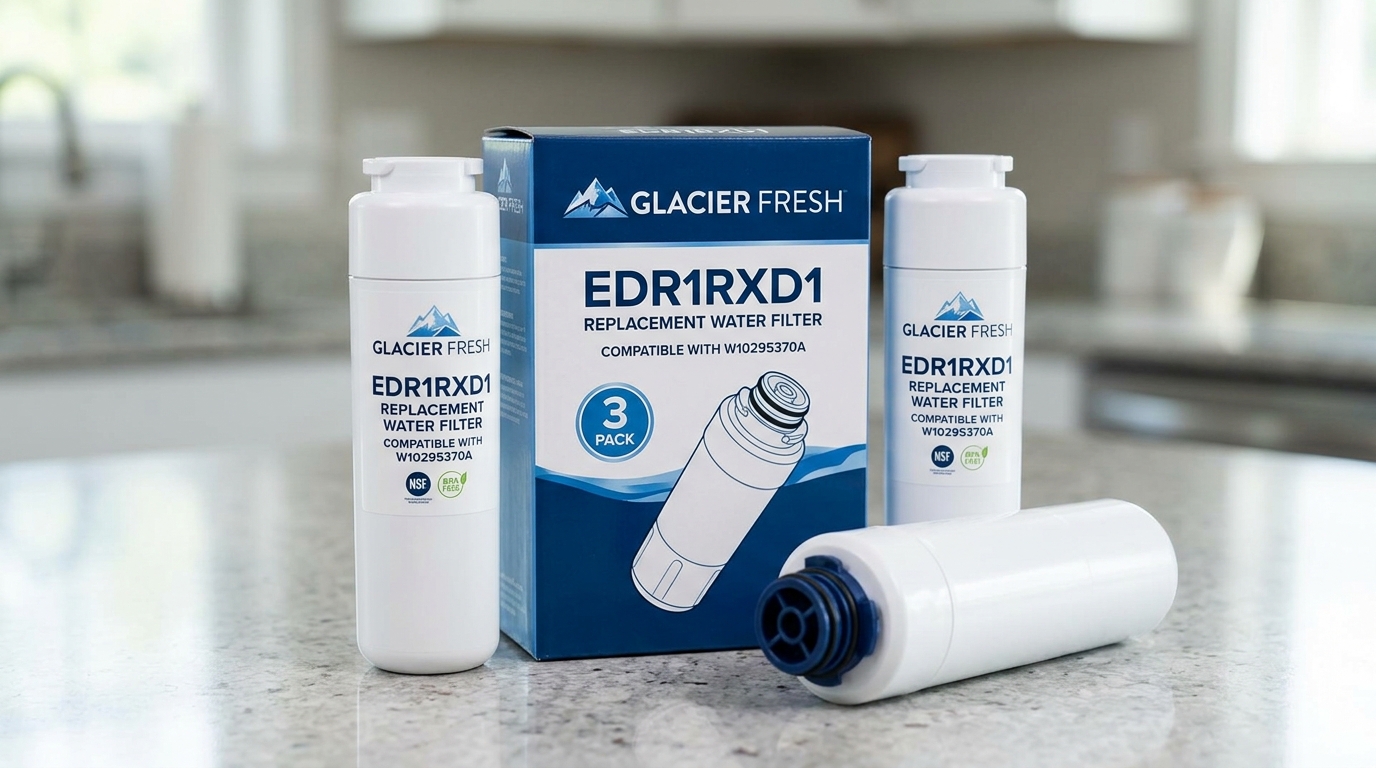
Buying one refrigerator filter is a small decision. Buying three at once changes the math. A 3-pack covers roughly a year and a half of replacements if the usual six-month rhythm holds, which means the choice you make today is also the choice you’ll be living with for several filter changes. That is part of what makes the GLACIER FRESH water filter, listed as compatible with EDR1RXD1 and W10295370A, worth a closer look before it goes into a cart.
This listing is a little different from the manufacturer-branded cartridges that often come up in this category. It’s a compatible filter, meaning it’s made by a company other than the refrigerator’s maker and designed to fit the same housing as the cartridge the appliance calls for. The two codes in the title are the key to understanding what that means. EDR1RXD1 is the code used for the EveryDrop Filter 1 cartridge, and W10295370A is another part number commonly connected with that same cartridge style. The listing is telling buyers which original parts it’s meant to stand in for.
This guide walks through what a compatible multi-pack filter generally is, how to check that it matches a given refrigerator, what to look at before trusting a third-party cartridge, and how to build a sensible replacement routine around three filters. To be clear about the approach, this is an informational article and not a review. No personal use of the product is being claimed, and nothing here describes a first-hand experience with it. The explanations draw on how refrigerator water filters generally work and on the details publicly listed for this product. Your refrigerator’s owner’s manual, the manufacturer’s documentation, and the seller’s own product information should always take priority over a general guide like this one.
A compatible filter isn’t automatically better or worse than an original. It’s a different kind of purchase that asks the buyer to pay attention to different things: certification paperwork, the quality of the fit, and the seller’s track record. Those are the details that deserve the most attention, and they’re what the rest of this article focuses on.
Key Features
A Compatible Filter, Not a Manufacturer Part
The most important thing to understand about this listing is what it is. A compatible filter is produced by a third party and designed to work in place of the cartridge named in its title. It isn’t made or authorized by the appliance maker unless the listing says so, and the brand name GLACIER FRESH is not the refrigerator brand. Any references to EveryDrop, Whirlpool, or specific part numbers describe compatibility and are not statements of origin. That’s an ordinary, widely used practice in the replacement parts market, and it’s worth keeping in mind when comparing options.
Two Part Numbers in the Title
The listing names EDR1RXD1 and W10295370A. Both are codes associated with the cartridge style that EveryDrop calls “Filter 1.” Part numbers can change over time as manufacturers update packaging or consolidate product lines, which is why listings often reference several codes at once. A buyer should treat these as search keys, not as a guarantee. The reliable approach is to take the filter number or part number listed in the refrigerator’s manual, or printed on the cartridge currently installed, and compare it with the codes in the listing.
Three Cartridges in One Order
The 3-pack format is the other defining detail. Multi-packs are popular with households that change filters on schedule, since they avoid reordering and keep a spare on hand. They also place more weight on the first purchase, because an unsuitable cartridge means three unsuitable cartridges. That’s one reason it can be sensible to check compatibility with extra care before buying a multi-pack, and to inspect the first cartridge carefully before installing any of them.
Activated Carbon Filtration
Most refrigerator filters, compatible or not, rely on activated carbon. This is a porous material with a large internal surface area that attracts and holds certain substances as water flows through. Carbon is widely associated with reducing chlorine taste and odor, and depending on how a particular cartridge is built and tested, certain other substances as well. What a specific product reduces, and by how much, depends on its design and testing, so the product’s own documentation is the right place to look.
Certification and Testing Information
Replacement filters in this category are often tested against voluntary NSF/ANSI standards, which describe what a filter can reduce under controlled test conditions. Whether a particular compatible filter has been tested, and which standards it was tested to, varies by product. The sensible approach is to look for specific, checkable information in the listing or on the packaging, such as the named standards, the substances tested, and a way to verify the claim. If a listing doesn’t provide that information, it’s better to treat the question as open than to assume a certification exists.
Inline Water and Ice Supply
In refrigerators that use this style of cartridge, the filter generally sits in the line feeding the dispenser and, in many models, the ice maker. That means one cartridge can influence both the water from the door and the ice in the bin, which is part of why a worn or poorly fitting filter can show up in more than one place.
Tool-Free Installation
Cartridges designed to fit this housing are typically replaced without tools, and in many refrigerators without shutting off the water supply. The motion varies by model, with some cartridges twisting and others pushing in and locking, so the manual is the right guide for the details. A cartridge that seats properly should feel secure, align with the housing, and not leave visible gaps.
Replacement Reminders
Many refrigerators track filter life by time or water volume and show a reminder on the control panel. After a replacement, the indicator generally needs to be reset. Some refrigerators are designed to recognize the cartridge installed in them, so it’s worth checking the manual to see whether a compatible filter affects how the reminder or any filter recognition works in your model.
Reading the Two Codes Without Getting Lost
Part numbers can feel like a foreign language, but a few simple steps make them manageable.
Start with the refrigerator’s model number. It’s printed on a label, commonly on an interior wall of the fresh food compartment or near the top of the cabinet. A quick photo of the label saves a lot of squinting later.
Next, look up what the owner’s manual says about filters. Many manuals list a filter number, a part number, or both. Some manuals list older numbers that have since been replaced, so it helps to check the manufacturer’s website if the code doesn’t match what’s on a listing.
Then check the cartridge currently installed. Its label usually shows a part number or filter number, and a photo taken before removal makes later comparison easy.
Finally, compare those codes with the ones in the product listing, and use the retailer’s fit checker as a last confirmation. If the codes in the manual, on the old cartridge, and in the listing point to the same cartridge style, that’s strong evidence of a match. If they don’t, it’s a signal to pause and dig deeper before ordering three cartridges at once.
How It Can Be Used
Scheduled Replacement Over a Long Stretch
The main use of a 3-pack is straightforward. A household replaces its refrigerator filter about every six months, as manufacturers commonly recommend, and the pack provides the next three cartridges. Marking the installation date on each one, or entering the next three dates on a calendar, turns the pack into a simple maintenance plan.
Keeping a Spare Ready
Having a cartridge on hand means the swap can happen the day the reminder appears instead of waiting for a delivery. That can be useful for households that notice a drop in flow or a change in taste and want to act right away.
Replacing an Overdue Filter
Plenty of households let the reminder sit for months. A filter left in place far beyond its recommended life may be doing little more than letting water pass through. Replacing it and setting up a more reliable reminder is a practical way to get back on track.
Troubleshooting Slow Flow
A drop in dispenser flow or a sluggish ice maker can sometimes trace back to a cartridge clogged with sediment. Replacing the filter is a reasonable first step. If flow stays weak with a fresh cartridge installed, the cause may lie elsewhere, such as a kinked tube or low household water pressure, and the manual or a service professional becomes the better resource.
Addressing Taste and Odor Changes
Chlorine taste and odor are among the most common complaints about municipal water, and carbon filtration is widely used to reduce them. If the dispenser water begins to taste flat or slightly off, a new cartridge is one of the simplest things to try first.
Starting Fresh After a Move
People who move into a home with an existing refrigerator rarely know when the filter was last changed. A new cartridge during the first week creates a clear starting point for tracking future replacements.
Sharing Across Households
Some families split multi-packs with relatives or neighbors who have the same refrigerator model. It’s a practical way to avoid ending up with spare cartridges that sit in a drawer, as long as everyone has confirmed compatibility with their own appliance first.
Who It May Be Suitable For
Owners of Refrigerators That Call for This Cartridge Style
The core audience is anyone whose refrigerator is designed around the cartridge style associated with EDR1RXD1 and W10295370A. Compatibility depends on the refrigerator’s model number and the filter listed in its manual, not on the brand name on the door.
Households That Replace Filters on a Schedule
A 3-pack suits people who keep a regular replacement routine and prefer to buy ahead. It avoids repeated orders and keeps a spare available.
Buyers Comfortable Reviewing Product Documentation
Compatible filters reward buyers who are willing to read the listing, check the packaging, and look for certification details. For people who enjoy that kind of research, a compatible filter can be a reasonable option to consider.
People Who Want to Compare Options
Some owners like to look at both manufacturer and third-party cartridges before deciding. A listing like this one gives them a point of comparison, as long as they evaluate it on its documentation and fit rather than on its title alone.
Households With More Than One Compatible Refrigerator
Homes with a main refrigerator and a second one in the garage or basement sometimes use the same cartridge style in both. A multi-pack can cover both appliances, provided each model has been checked.
Anyone Who Prefers Planning Ahead
For people who like to line up household supplies for the year, three cartridges in one order can simplify planning. The trade-off is that it concentrates the decision, so it makes sense to be sure about compatibility before purchasing.
Important Things to Consider
Compatibility Comes First
Check the refrigerator’s model number, the owner’s manual, and the cartridge currently installed. Compare those codes with the ones in the listing and use the retailer’s fit checker. With a 3-pack, a mismatch affects three cartridges, so it’s worth being thorough.
A Compatible Filter Is Not an Original
It’s reasonable to say plainly that this is a third-party product designed to work in place of a manufacturer cartridge. Owners of refrigerators that are still under warranty may want to read their warranty terms to see how third-party filters are treated. Some refrigerators are also designed to recognize the filter installed in them, and a compatible cartridge may or may not interact with that feature in the same way as an original. The manual is the best place to find out.
Look for Specific Certification Details
Words like “certified” or “tested” carry more weight when they come with specifics. Useful details include the named standard, the list of substances tested, and a way to verify the claim, such as a certificate number or a reference to the testing body. If a listing doesn’t provide that information, it’s better to treat certification as unconfirmed.
Inspect the First Cartridge Carefully
Before installing, check the cartridge against the old one. Look at the size, the shape of the connection points, and the condition of the seals. Packaging should look consistent, and documentation should be present. If anything looks off, it’s reasonable to contact the seller before installing it.
Watch for Leaks After Installation
A cartridge that isn’t seated correctly can leak. After installing, look around the housing while water runs and again a few hours later. A slow drip behind a grille can go unnoticed, so it’s worth checking more than once.
Flush the Line
Manufacturers generally recommend running a set amount of water through the dispenser after installing a new cartridge to clear trapped air and loose carbon particles. Skipping it can cause sputtering or cloudy water at first. Follow the volume listed in your manual.
Reset the Reminder
If the refrigerator has a filter indicator, it usually needs to be reset after a replacement. Without that step, the light may keep showing, which makes it harder to track the real replacement date.
Replacement Timing Is a Guideline
The six-month interval is a recommendation. Sediment-heavy water or high usage can shorten a cartridge’s practical life, and light usage can mean the date arrives before the cartridge is truly spent. If flow slows earlier than expected, replacing sooner is reasonable.
A Filter Has Limits
Carbon-based refrigerator filters can reduce certain tastes, odors, and substances, but they aren’t designed to address every water concern. Households on private wells or those with known contamination or microbiological issues may need additional treatment beyond a refrigerator cartridge. A water test or the local utility’s annual quality report offers more specific information than a filter listing.
Storing the Spares
With three cartridges in the pack, storage matters. Keep the unused ones in their packaging in a clean, dry place away from extreme heat or cold. Mark the box or the cartridges with planned replacement dates if that helps you stay organized.
Return and Support Options
Because the purchase involves more than one cartridge, it’s sensible to check the seller’s return policy and customer support options before buying. Knowing what’s available if the first cartridge doesn’t fit or seems defective makes the decision easier.
Comparison of General Categories
Manufacturer Cartridges and Third-Party Compatible Filters
Manufacturer cartridges are produced or authorized by the appliance maker and designed for specific model groups. Third-party compatible filters come from other companies and are engineered to fit the same housing. Quality and documentation vary widely among third-party options. Some carry their own certifications and publish detailed data, while others offer very little. A fair comparison looks at certification paperwork, fit, seller reputation, warranty implications, and the cost of ownership over time, instead of assuming that either category is automatically better.
Single Filters and Multi-Packs
Single filters keep the upfront commitment small and are a natural choice for a first purchase or a quick replacement. Multi-packs cover several changes, keep a spare available, and reduce reordering. The trade-off is that they concentrate the decision, which makes upfront compatibility checks more valuable.
Refrigerator Cartridges and Pitcher Filters
Pitcher filters treat water in batches and live on a counter or in the refrigerator. They’re portable and independent of any appliance, but they need manual refilling and usually have a smaller capacity. A refrigerator cartridge works in line with the supply, delivering filtered water and ice on demand. The trade-off is automatic convenience versus portability.
Refrigerator Cartridges and Faucet-Mounted Filters
Faucet-mounted filters treat water at the sink and can usually be turned on and off as needed. They’re easy to install and don’t depend on a particular refrigerator, but they only filter water drawn from that tap. A refrigerator cartridge filters only what comes from the appliance. Some households use both.
Refrigerator Cartridges and Under-Sink Systems
Under-sink systems filter water at the kitchen tap and often use multiple stages. They can handle larger volumes and more specific concerns, but they involve installation and a separate maintenance schedule. A refrigerator cartridge is simpler and targets a single appliance. Households with broader water quality concerns sometimes use both.
Refrigerator Cartridges and Whole-House Systems
Whole-house systems treat water as it enters the home, protecting plumbing and fixtures along with drinking water. They represent a larger investment in equipment and installation. A refrigerator cartridge addresses a much smaller piece of the picture and can complement a whole-house system rather than replace it.
Filtered Tap Water and Bottled Water
Some households use refrigerator-filtered water in place of bottled water for everyday drinking. The decision depends on taste preference, local water quality, and convenience. Filtered tap water avoids bottle storage and disposal, while bottled water may be preferred for travel or by people who like a particular brand.
Frequently Asked Questions
Is this the same as the EveryDrop Filter 1?
No. It’s a compatible filter made by a different company and designed to fit the same housing. The listing references EDR1RXD1 and W10295370A to show which original part numbers it’s intended to replace. It is not a manufacturer part unless the seller says so, and the listing should be read with that in mind.
Why does the title list two part numbers?
Part numbers can change over time or appear in different forms across manuals and listings. Listing both helps buyers searching under either code. It’s still best to compare them with your own manual and the label on your current filter.
Will it fit my refrigerator?
That depends on your refrigerator’s model number and the filter your manual specifies. Check the listing’s compatibility information, use the retailer’s fit checker, and compare the codes with those on your current cartridge. Agreement across those sources is the best assurance.
Does the refrigerator need to recognize the filter?
Some refrigerators are designed to identify the cartridge installed in them, and others rely on a simple mechanical connection. Your owner’s manual explains how your model works and whether a third-party cartridge is supported.
Could using a compatible filter affect my warranty?
It can depend on the manufacturer’s terms and on how a given warranty is written. Reading the warranty documentation, or contacting the manufacturer, is the most reliable way to find out.
Is the filter certified?
This depends on the specific product. Look for named standards, a list of substances tested, and a way to verify the claim on the listing or packaging. If those details aren’t provided, treat certification as unconfirmed.
How often should it be replaced?
Manufacturers commonly recommend about every six months, or sooner if flow slows or the reminder indicates it’s time. Water quality and usage can shift the ideal timing.
Do I need tools to install it?
Cartridges of this type are generally designed for homeowner replacement without tools, and in many refrigerators without shutting off the water. The manual provides the steps for your model.
Why is my water cloudy after installing a new filter?
Trapped air and loose carbon particles are the usual causes. Running water through the dispenser for the amount your manual recommends normally clears it up.
What if the cartridge leaks after installation?
Turn off the water supply to the refrigerator if needed, remove the cartridge, check that it’s the correct type, and reseat it following the manual. If it still leaks, contact the seller or the manufacturer before continuing to use it.
Does it remove everything from water?
No. Carbon-based filters reduce certain substances but aren’t designed to treat every concern. A water test or your utility’s quality report can help you decide whether additional treatment makes sense.
What should I do with the old cartridge?
Disposal options vary by location. Some manufacturers and retailers offer recycling programs, so the packaging or the manufacturer’s website is a good place to check.
Conclusion
The GLACIER FRESH water filter, listed as compatible with EDR1RXD1 and W10295370A and sold in a 3-pack, is a third-party replacement for a refrigerator cartridge that many owners associate with the EveryDrop Filter 1 style. It does the same basic kind of job as other carbon-based refrigerator filters: sit in the water line, help reduce certain tastes, odors, and other substances, and supply the dispenser and ice maker. What sets it apart is the buying decision around it, which leans on compatibility checks, documentation, and the seller’s credibility more than on a familiar appliance brand.
Buying three cartridges at once raises the stakes slightly. Confirm the refrigerator’s model number, compare the codes in the manual, on the old cartridge, and in the listing, and look for specific certification details instead of general claims. Inspect the first cartridge before installing it, flush the line, check for leaks, and reset the reminder. With those steps done, the pack becomes a simple maintenance plan for the next year and a half, with dates marked on the cartridges or the calendar. As with any refrigerator filter, it’s one piece of a household’s overall water picture, and keeping realistic expectations helps in deciding when something beyond a cartridge might be worth considering.