Introduction
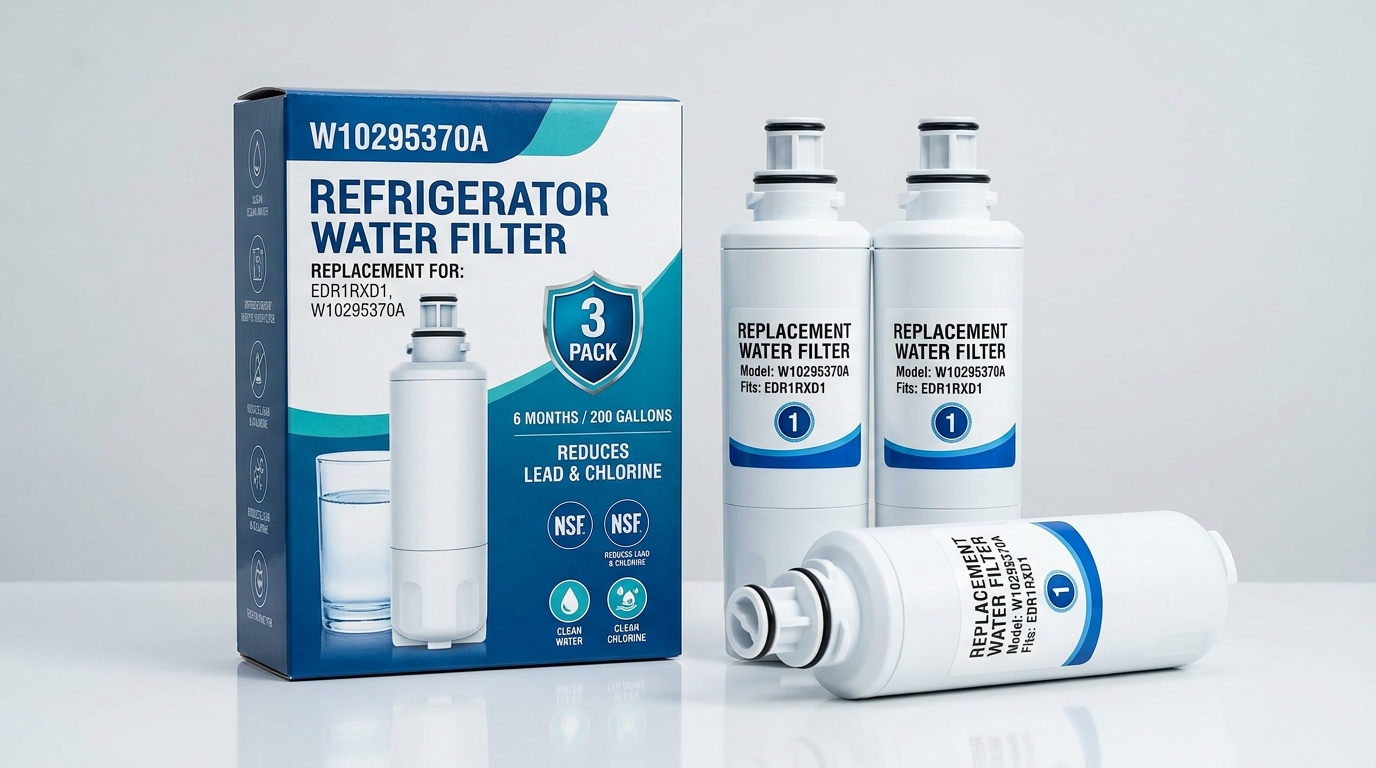
Product titles for replacement refrigerator filters can look like someone dropped a handful of tiles on a keyboard. The listing for this one reads: “W10295370A Water Filter Replacement for Whirlpool EDR1RXD1, 3PACK.” Nothing in that string is decorative. Every piece is doing a job, and once you know what each piece is saying, the whole purchase gets easier to judge.
This guide goes through that title one piece at a time, then looks at what a replacement 3-pack of this kind is generally designed to do, how to confirm it matches a given refrigerator, how to plan around having three cartridges on hand, and which details deserve a second look before ordering. It is informational, not a review. No personal use of the product is being claimed, and nothing here describes a first-hand experience with it. The explanations draw on how refrigerator water filters generally work and on the details publicly listed for this product. The refrigerator’s owner’s manual, the manufacturer’s documentation, and the seller’s own product information should always take priority over a general article like this one.
The reason to read a title this carefully is practical. Refrigerator filters are easy to order and annoying to return. A cartridge that looks right but isn’t, a pack that arrives with the wrong connection style, or a listing that implies more than it says can turn a two-minute task into a week of troubleshooting. A few minutes of attention before checkout is the cheapest maintenance step in the whole routine.
Decoding the Title
“W10295370A”
This is a part number, and it comes first in the title, which is a common way for sellers to make sure the listing turns up when someone searches by code. It is the kind of identifier that appears in appliance manuals, parts diagrams, and old filter packaging. Part numbers like this one often show up alongside a manufacturer code for the same cartridge style, which explains why the title mentions two of them. A part number is a search key and a clue. It is not, on its own, a guarantee that a cartridge fits a given refrigerator.
“Water Filter Replacement”
The word “replacement” matters. In the replacement-parts market, this word usually signals that the product is designed to take the place of a particular original cartridge. It often indicates a part made by a company other than the appliance maker, though the title alone doesn’t settle that, and the seller’s description and packaging are better evidence. Neither reading is a problem by itself. It simply means the buyer should check documentation and fit with a bit more care than they might with a cartridge that comes from the appliance brand.
“for Whirlpool”
This phrase describes compatibility. It tells you which appliance family the cartridge is meant to work with. It does not say the cartridge was made by Whirlpool. In listings for replacement parts, brand names appear all the time for the purpose of identifying fit, and a careful reader keeps “made by” and “made to fit” in separate mental boxes.
“EDR1RXD1”
This is the code associated with the EveryDrop “Filter 1” cartridge style. EveryDrop is the filter line sold in connection with Whirlpool-family refrigerators, and its filters are numbered by design. The “1” points to a particular cartridge style and the group of refrigerators built to accept it. The number is a fit code and not a grade of quality. A refrigerator that calls for Filter 1 expects this style, and one that calls for a different number generally expects something else.
“3PACK”
Three cartridges in one order. At the usual six-month replacement rhythm, that covers roughly a year and a half of filter changes. A multi-pack is convenient for households that follow a schedule, and it raises the stakes of the first compatibility check, since a mismatch affects all three cartridges and not just one.
Taken together, the title says: a replacement cartridge, identified by a part number, designed to work as a stand-in for the EveryDrop Filter 1 style in Whirlpool-family refrigerators, sold as a set of three.
Key Features
A Replacement Cartridge Designed for Filter 1 Refrigerators
The central promise of this listing is fit. The cartridge is described as a stand-in for a specific original style, and the codes in the title are how the seller signals which one. Whether it actually fits a particular refrigerator depends on that refrigerator’s model number and the filter its manual specifies.
Activated Carbon Filtration
Most refrigerator filters, original or replacement, rely on activated carbon. The material is porous and has a very large internal surface area for its size, which lets it attract and hold certain substances as water passes through. Carbon is widely associated with reducing chlorine taste and odor, and depending on how a particular cartridge is built and tested, certain other substances too. What a specific product reduces, and under what conditions, is a matter for its own documentation and not for general assumptions.
Testing and Certification Information
Replacement filters in this category are often tested against voluntary NSF/ANSI standards, which describe what a filter can reduce under controlled test conditions. Whether a given replacement cartridge has been tested, and to which standards, varies by product. The sensible approach is to look for specifics on the listing or packaging, such as the named standards, the list of substances tested, and some way to verify the claim. If those details aren’t provided, certification is best treated as unconfirmed.
Supply to the Dispenser and Ice Maker
In refrigerators designed for this cartridge style, the filter generally sits in the line that feeds the water dispenser and, in many models, the automatic ice maker. One cartridge therefore influences both the water from the door and the ice in the bin.
Tool-Free Installation
Cartridges designed for this housing are typically replaced without tools, and in many refrigerators without shutting off the water supply. The motion depends on the model, with some cartridges twisting and others pushing in and locking. The manual is the right guide for the details, and a properly seated cartridge should feel secure and align cleanly with the housing.
Three-Pack Format
Three cartridges per order is the second defining feature. For households that replace filters on schedule, it means fewer orders and a spare on the shelf. For first-time buyers of a particular cartridge, it means the first compatibility check carries more weight.
Reminder Compatibility
Many refrigerators track filter life by time or water volume and show a reminder. After a replacement, the indicator usually needs to be reset. Some refrigerators are also designed to recognize the cartridge installed in them, so the manual is the place to confirm how a replacement part interacts with that feature, if your model has it.
A Short Guide to What Happens Inside the Cartridge
It helps to know what the cartridge is doing, because it explains why replacement schedules exist.
Water enters the housing under household pressure and flows through a block of compressed activated carbon. Certain substances stick to the carbon’s surface, and the block traps some fine particles depending on how tightly it’s formed. The filtered water then continues to the dispenser and ice maker.
The carbon’s capacity is finite. Its pores gradually fill, and the cartridge becomes less able to hold more. Because water keeps flowing the whole time, the dispenser can seem normal even as filtration performance declines. There’s no sharp cutoff on a particular day, which is why manufacturers recommend a replacement interval, commonly around six months for refrigerator cartridges, instead of telling owners to wait for a failure.
Sediment-heavy water, heavy use, or both can shorten a cartridge’s practical life. Light use can mean the date arrives before the cartridge is truly spent by volume. The interval is a guideline, and the reminder light is the refrigerator’s way of helping owners follow it.
How It Can Be Used
Replacing a Filter on Schedule
The most common use is the plain one. Around the six-month mark, or when the reminder appears, an old Filter 1 style cartridge comes out and a new one goes in. A 3-pack covers the next three changes.
Building an Eighteen-Month Plan
Having three cartridges on hand invites a simple plan. When the first cartridge goes in, write the installation date on it, and write the planned dates for the next two changes on the box or in a calendar. Some households attach the changes to a seasonal routine, such as the start of spring and fall, so the schedule doesn’t depend on memory or on an indicator light.
Keeping a Spare Ready
A cartridge on the shelf means a swap can happen the day the reminder appears or the day the dispenser slows, with no waiting for delivery. That’s particularly useful for busy households that don’t want to run on an overdue filter while waiting for a package.
Rescuing an Overdue Cartridge
Plenty of households let the reminder sit for months. A filter left in place far beyond its recommended life may be doing little more than letting water pass through. Replacing it, then setting a better reminder, is a practical way to get back on track.
Investigating Slow Flow
A drop in dispenser flow, or an ice maker that seems slower than usual, can sometimes point to a cartridge clogged with sediment. Replacing the filter is a reasonable first step. If flow stays weak with a fresh cartridge installed, the cause may lie elsewhere, such as a kinked tube or low household water pressure, and the manual or a service professional is a better resource.
Responding to Taste or Odor Changes
Chlorine taste and odor are among the most common complaints about municipal water, and carbon filtration is widely used to reduce them. If the dispenser water begins to taste flat or slightly off, a new cartridge is one of the simplest things to try first.
Covering Two Refrigerators
Some homes have a main refrigerator in the kitchen and a second one in a garage or basement. If both are designed around the same cartridge style, a 3-pack can serve both, provided each model has been checked on its own.
Starting Fresh After a Move
People who move into a home with an existing refrigerator rarely know when the filter was last changed. A new cartridge during the first week creates a known starting point.
Who It May Be Suitable For
Owners of Refrigerators That Call for This Cartridge Style
The core audience is anyone whose refrigerator is designed around the Filter 1 style associated with the codes in the title. Compatibility depends on the refrigerator’s model number and the filter its manual specifies, not on the brand name on the door.
Households That Replace Filters on a Schedule
A 3-pack suits people who keep a regular rhythm and prefer to buy ahead. It reduces reordering and keeps a spare available.
Buyers Comfortable Reading Listings and Packaging
Replacement parts reward people who read carefully. Anyone who is willing to check codes, look for certification specifics, and inspect packaging when it arrives is well positioned to evaluate a product like this one.
People Comparing Options
Some owners look at both manufacturer cartridges and replacement cartridges before deciding. A listing like this one gives them something to compare, as long as they judge it on documentation and fit, not on the title alone.
Households With Heavy Water and Ice Use
Families that fill bottles, run the dispenser for cooking, and use a lot of ice may reach the replacement date sooner than the calendar suggests. Having spare cartridges makes it easy to respond when flow slows or taste changes.
Anyone Who Likes Planning Ahead
For people who like to line up household supplies for the year, three cartridges in one order can simplify planning. The trade-off is that the decision is concentrated, which makes upfront checks more valuable.
Important Things to Consider
Compatibility Comes First
Photograph the refrigerator’s model label, which is usually inside the fresh food compartment. Confirm the filter number or part number in the owner’s manual. Compare both with the codes in the listing and use the retailer’s fit checker. If the old cartridge is still installed, compare its label as well. With a 3-pack, a mismatch affects three cartridges, so thoroughness pays off.
Understand What “Replacement” and “for Whirlpool” Mean
These phrases describe fit and intended role. They don’t, on their own, say who made the cartridge. If it matters to you whether a cartridge comes from the appliance maker, look for that information in the seller’s description and on the packaging, instead of reading it into the title.
Check the Warranty Language
Owners of refrigerators still under warranty may want to read their warranty documents to see how replacement filters from other companies are treated. The terms vary, and the manufacturer or the manual can clarify.
Check Whether Your Refrigerator Recognizes the Cartridge
Some refrigerators are designed to identify the cartridge installed in them, while others rely on a simple mechanical connection. The manual explains which applies to your model and whether a replacement part is supported.
Look for Specific Certification Details
Words like “certified” and “tested” carry more weight when they come with specifics: a named standard, a list of substances, and a way to verify the claim. If the listing doesn’t provide those details, treat certification as unconfirmed rather than assumed.
Inspect the First Cartridge Before Installing
Compare it with the old one. Look at the size, the connection points, and the seals. Packaging and documentation should look consistent. If anything seems off, it’s reasonable to contact the seller before installing.
Check the Seller’s Return Terms
Because the purchase involves three cartridges, it’s wise to know what happens if the first one doesn’t fit or seems defective. A clear return policy makes the decision easier.
Watch for Leaks
A cartridge that isn’t fully seated can drip. After installing, look around the housing while water runs and again a few hours later. A slow leak behind a grille can go unnoticed for a long time.
Flush the Line
Manufacturers generally recommend running a set amount of water through the dispenser after installing a new cartridge to clear trapped air and loose carbon particles. Skipping this step can cause sputtering or cloudy water at first. Follow the volume in your manual.
Reset the Indicator
If the refrigerator has a filter reminder, it typically needs to be reset after a replacement. Otherwise the light may keep showing, which makes the next replacement date harder to track.
Treat the Interval as a Guideline
Six months is a recommendation. Heavy use or sediment-heavy water can shorten a cartridge’s practical life, and light use can mean the date arrives early. If flow slows sooner than expected, replacing earlier is reasonable.
Know the Limits of a Filter
Carbon-based refrigerator filters can reduce certain tastes, odors, and substances, but they aren’t designed to address every water concern. Households on private wells, or those with known contamination or microbiological concerns, may need additional treatment. A water test or the local utility’s annual quality report offers more specific information than a filter listing.
Store the Spares Well
With two cartridges waiting on the shelf, storage matters. Keep them in their packaging, in a clean, dry place away from extreme heat or cold, and mark planned replacement dates where you’ll see them.
Dispose of Old Cartridges Thoughtfully
Rules vary by location. Some manufacturers and retailers offer recycling programs, so the packaging or the manufacturer’s website is a good place to check.
Comparison of General Categories
Manufacturer Cartridges and Replacement Cartridges
Manufacturer cartridges are produced or authorized by the appliance maker and designed for specific model groups. Replacement cartridges come from other companies and are designed to fit the same housing. Quality and documentation vary widely among replacement options. Some carry their own certifications and publish detailed test data, while others offer very little. A fair comparison looks at certification paperwork, fit, seller reputation, warranty implications, and cost of ownership, without assuming that either category is automatically better.
Single Cartridges and Multi-Packs
A single cartridge keeps the commitment small and suits a first purchase or a one-time swap. A multi-pack covers several changes and keeps a spare on hand, at the cost of concentrating the decision. Households with a steady schedule often find multi-packs convenient once compatibility is confirmed.
Part-Number Searches and Model-Number Searches
Searching by part number, as this listing’s title invites, is quick, but part numbers can overlap across years and brands. Searching by the refrigerator’s model number through the retailer’s fit tool or the manufacturer’s lookup works from the appliance side, which is usually the more reliable direction. Using both and comparing results gives the best assurance.
Refrigerator Cartridges and Pitcher Filters
Pitcher filters treat water in batches and live on a counter or in the refrigerator. They’re portable and independent of any appliance, but they need manual refilling and usually have a smaller capacity. A refrigerator cartridge works in line with the supply, delivering filtered water and ice on demand. The trade-off is automatic convenience versus portability.
Refrigerator Cartridges and Faucet-Mounted Filters
Faucet-mounted filters treat water at the sink and can usually be switched on and off as needed. They’re easy to install and don’t depend on a particular refrigerator, but they only filter water drawn from that tap. A refrigerator cartridge filters only what comes from the appliance. Some households use both.
Refrigerator Cartridges and Under-Sink Systems
Under-sink systems filter water at the kitchen tap and often use multiple stages. They can handle larger volumes and more specific concerns, but they involve installation and a separate maintenance schedule. A refrigerator cartridge is simpler and targets a single appliance. Households with broader water quality concerns sometimes use both.
Refrigerator Cartridges and Whole-House Systems
Whole-house systems treat water where it enters the home, protecting plumbing and fixtures along with drinking water. They’re a larger investment in equipment and installation. A refrigerator cartridge addresses a much smaller piece of the picture and can complement a whole-house system rather than replace it.
Filtered Tap Water and Bottled Water
Some households use refrigerator-filtered water in place of bottled water for everyday drinking. The decision depends on taste, local water quality, and convenience. Filtered tap water avoids bottle storage and disposal, while bottled water may be preferred for travel or by people who like a specific brand.
Frequently Asked Questions
What does the title of this listing mean?
It describes a replacement cartridge, identified by the part number W10295370A, designed to work in place of the EveryDrop Filter 1 style (EDR1RXD1) in Whirlpool-family refrigerators, sold as a pack of three. The phrases describe fit and role and do not, by themselves, say who manufactured the cartridge.
Is this a Whirlpool-made filter?
The title says “for Whirlpool,” which describes compatibility. Whether the cartridge was made by the appliance maker is something to confirm in the seller’s description and on the packaging.
Are W10295370A and EDR1RXD1 the same cartridge style?
The two codes are commonly associated with the same cartridge style, which is why listings often mention both. To be sure about your refrigerator, compare the codes with your manual and the label on your current cartridge, and use the manufacturer’s lookup if the sources disagree.
How do I know it fits my refrigerator?
Start with the refrigerator’s model number, then check it against the listing’s compatibility information, the retailer’s fit checker, and your owner’s manual. If possible, compare with the label on the cartridge you’re replacing.
How often should I replace the filter?
Manufacturers commonly recommend about every six months, or sooner if flow slows or the reminder says it’s time. Water quality and usage can shift the ideal timing.
Will using a replacement filter affect my warranty?
It depends on the manufacturer’s terms and how the warranty is written. Reading the warranty documentation or contacting the manufacturer is the most reliable way to find out.
Does my refrigerator need to recognize the filter?
Some models are designed to read information from the cartridge, and others rely on a simple mechanical connection. Your manual explains how your model works.
Is the filter certified?
That depends on the specific product. Look for named standards, a list of substances tested, and a way to verify the claim on the listing or packaging. If those details aren’t provided, treat certification as unconfirmed.
Do I need tools to install it?
Cartridges of this type are generally designed for homeowner replacement without tools, and in many refrigerators without shutting off the water. The manual gives the steps for your model.
Why is my water cloudy after installing a new filter?
Trapped air and loose carbon particles are the usual causes. Running water through the dispenser for the amount your manual recommends normally clears it up.
What if the cartridge leaks?
If needed, turn off the water supply to the refrigerator, remove the cartridge, confirm it’s the correct type, and reseat it according to the manual. If it still leaks, contact the seller or the manufacturer before continuing to use it.
Does it remove everything from water?
No. Carbon-based filters reduce certain substances but aren’t designed to treat every concern. A water test or your utility’s quality report can help you decide whether additional treatment makes sense.
What should I do with the old cartridge?
Disposal options vary by location. Some manufacturers and retailers offer recycling programs, so the packaging or the manufacturer’s website is a good place to check.
Conclusion
The W10295370A replacement water filter 3-pack is easiest to understand once its title is read piece by piece. It’s a replacement cartridge, identified by a part number, designed to stand in for the EveryDrop Filter 1 style in Whirlpool-family refrigerators, and sold as a set of three. Those facts describe what the product is meant to fit and how it’s packaged, and they leave a few questions for the buyer to answer through documentation: who made it, what it was tested for, and how it interacts with a particular refrigerator.
A short routine settles most of those questions. Photograph the model label, confirm the filter number in the manual, compare it with the codes in the listing and on the old cartridge, and look for certification specifics instead of general claims. Inspect the first cartridge, seat it firmly, flush the line, check for drips, and reset the reminder. Then put the three planned replacement dates somewhere visible. Like any refrigerator filter, this is one piece of a household’s wider water picture, and keeping realistic expectations helps in deciding when something beyond a cartridge might be worth considering.