Introduction
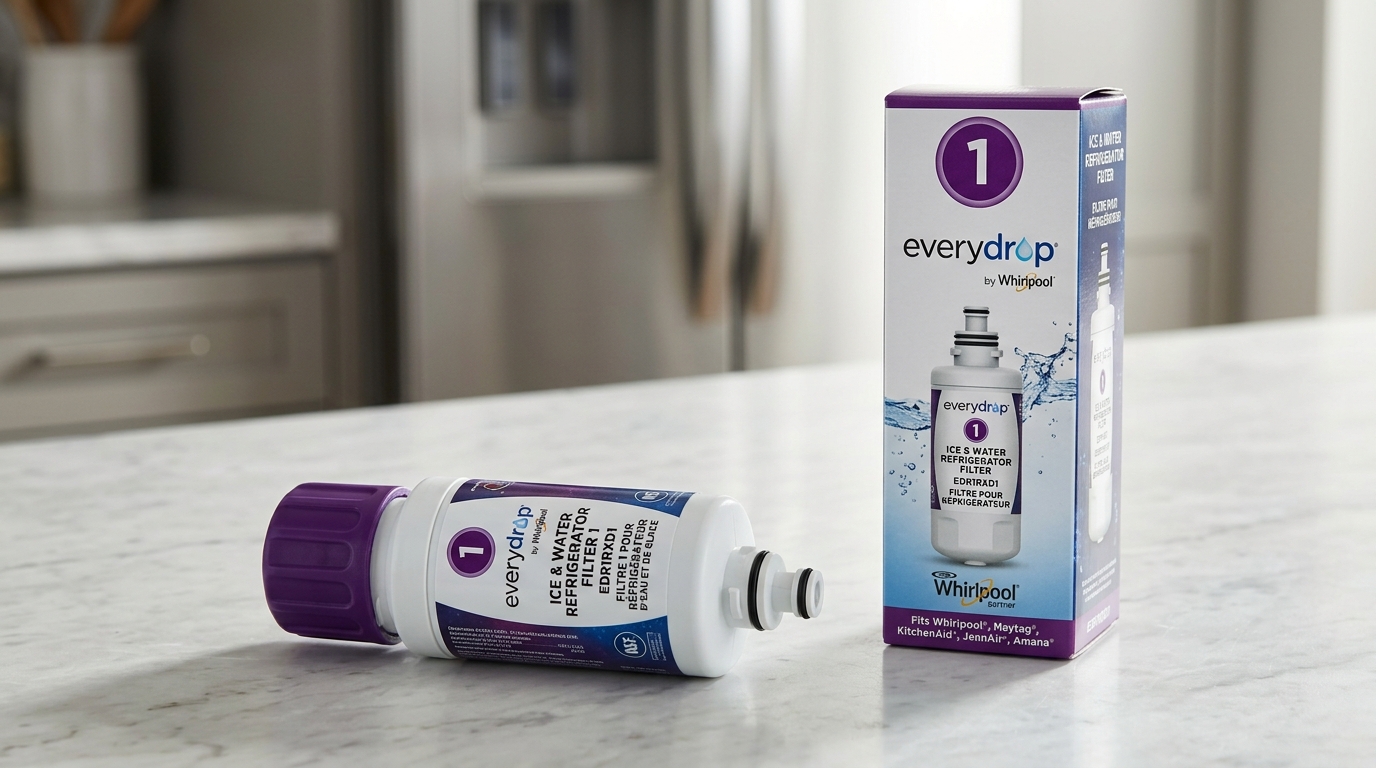
A refrigerator water filter has a short, predictable life, and that is part of what makes it easy to mismanage. It goes in, it does its quiet work for about half a year, and then it needs to come out. In between, most people never see it. The EveryDrop by Whirlpool Ice & Water Refrigerator Filter 1, part number EDR1RXD1, follows exactly that arc. It’s a purple cartridge built for refrigerators that call for “Filter 1,” and its job is to sit in the water line and help reduce certain tastes, odors, and other substances in the water and ice that come out of the door.
Instead of walking through the cartridge as a list of specifications, this guide follows it through its working life: before it’s bought, on installation day, through the months in service, and at the point where it needs replacing. That timeline makes it easier to see why the small details matter, such as checking a model number, flushing the line, or glancing at the reminder light. It also shows where the common mistakes tend to happen.
A quick word about the approach. This is an informational article, not a review. No personal use of the product is being claimed, and nothing here describes a first-hand experience with it. The explanations draw on how refrigerator water filters generally work and on the details publicly listed for this model. Your refrigerator’s owner’s manual and the manufacturer’s documentation always take priority over a general guide like this one, particularly for compatibility, certification details, and replacement timing.
Filters like this are an unglamorous purchase, but they touch things people use every day: the glass of water on the nightstand, the pot for pasta, the ice in a cold drink. A little background goes a long way toward making the purchase and the maintenance routine feel straightforward.
Key Features
The Number “1” and What It Points To
EveryDrop labels its cartridges with numbers, and “1” identifies a specific cartridge style along with the group of refrigerators designed to take it. The number isn’t a grade of quality, and it doesn’t describe how much filtration the cartridge provides. It works more like a size code: it tells you what fits. A refrigerator that calls for Filter 1 expects this style, and a refrigerator that calls for a different number generally expects something else, even if the cartridges look similar side by side.
EDR1RXD1 as the Identifier
The code EDR1RXD1 is the part number for this cartridge, and it’s the most dependable string to use when comparing listings or checking a manual. Product titles vary from one seller to another, but a part number stays the same. Some owner’s manuals and older listings show earlier part numbers for cartridges that were later grouped under the EveryDrop name, so if your manual lists a different code, the manufacturer’s compatibility tool can show how the numbers relate.
Activated Carbon Filtration
Most refrigerator cartridges, this one included, rely on activated carbon. The material is porous and has an enormous internal surface area for its size, which lets it attract and hold certain substances as water moves through the block. It’s the same basic idea used in many pitcher and faucet filters. Carbon is widely associated with reducing chlorine taste and odor, and depending on how a cartridge is built and tested, certain other substances too. What a specific cartridge reduces, and under what conditions, is listed in its performance data, which is a better source than any general description.
Testing and Certification
Cartridges in this category are commonly tested against voluntary NSF/ANSI standards, which describe what a filter can reduce under controlled test conditions. The packaging and the manufacturer’s data sheet list the standards that apply and the substances that were tested. Anyone with a specific concern, such as a particular contaminant, should treat that paperwork as the source of truth.
Inline Water and Ice Supply
In refrigerators that use this kind of cartridge, the filter generally sits in the line that feeds the dispenser and the automatic ice maker. One cartridge can therefore influence both the water from the door and the ice in the bin. That is why an overdue filter sometimes shows up in the ice first, since cubes pick up odors easily.
Tool-Free Swap
Cartridges of this type are designed for homeowner replacement without tools, and in many refrigerators without shutting off the water supply. The mechanism depends on the model. Some cartridges twist, some push in and lock, and the housing may be inside the refrigerator compartment or down in the base grille. The manual gives the right sequence for your refrigerator, and following it matters for getting a proper seal.
Purple Branding
The purple styling is a branding choice that makes the cartridge easy to identify. It’s handy when you’re holding the new one next to the old one, but color is not proof that two cartridges match.
Status Reminders
Many refrigerators designed for this style of cartridge track filter life by time or water volume and show a reminder on the control panel. After a replacement, the indicator usually needs to be reset, and the manual explains the steps.
The Cartridge’s Life, Stage by Stage
Before Purchase: The Matching Stage
Most problems with refrigerator filters happen before the cartridge ever reaches the kitchen. The refrigerator’s model number is the anchor for everything, and it’s usually printed on a label inside the fresh food compartment, often along a side wall or near the top. Taking a photo of that label saves a lot of squinting later. From the model number, the manual or the manufacturer’s website points to the filter number the refrigerator calls for. If it says Filter 1, this cartridge family applies. A final comparison with the label on the filter currently installed closes the loop, because two or three sources agreeing is as much certainty as a buyer can get.
Installation Day: The Seating Stage
Once the new cartridge is in hand, the work is short. The old filter comes out, the new one goes in, and the housing closes or locks. What matters here is the seal. A cartridge that isn’t fully seated can drip, and a slow drip behind a grille can go unnoticed for a long time. Running a small amount of water and watching the housing, then checking again a few hours later, catches most leaks early.
The First Few Minutes: The Flushing Stage
Manufacturers typically recommend running a set volume of water through the dispenser after installing a new cartridge. This clears trapped air and loose carbon particles, and skipping it can lead to sputtering or temporarily cloudy water. The volume and timing are in your manual. Resetting the reminder light belongs in this same window, since an unreset indicator makes it harder to know when the next change is due.
Months One Through Four: The Quiet Stage
For most of its life, the cartridge simply works. Water passes through the carbon block, certain substances are held back, and nobody thinks about it. The carbon’s capacity is finite, though. Its surface slowly fills, and the cartridge gradually becomes less able to hold additional substances. There’s no sharp cutoff on a particular day. Performance declines slowly, which is why the manufacturer gives a recommended interval instead of a precise expiration date.
Months Five and Six: The Watching Stage
As the recommended replacement window approaches, a few signs are worth noticing. Flow from the dispenser may slow, the ice maker may seem slower than usual, or the water may start tasting flatter. Any of these can point to a cartridge nearing the end of its useful life, although slow flow can also come from other causes in the supply line. The reminder light often arrives around this time, and many manufacturers suggest roughly six months as the normal interval.
Replacement Time: The Handoff Stage
When the time comes, the cycle starts again. A good habit is to write the installation date on the new cartridge with a marker, or to set a calendar reminder, so the schedule doesn’t depend entirely on an indicator light. Some households keep a spare on hand so the swap happens the day the reminder appears instead of weeks later.
How It Can Be Used
Routine Scheduled Replacement
The most common use is simply replacing an old Filter 1 cartridge on schedule. Around the six-month mark, or when the reminder appears, the swap takes a few minutes and keeps the dispenser and ice maker supplied with filtered water.
Rescuing an Overdue Filter
It happens in a lot of homes: the indicator comes on, gets ignored, and the cartridge stays in for a year or more. A filter left far beyond its recommended life may be doing little more than letting water flow through. Replacing it and setting a better reminder is a practical way to get back on track.
Addressing Slow Flow
A drop in dispenser flow can point to a cartridge clogged with sediment. Replacing it is a sensible first step before assuming something else has failed. If flow stays weak with a fresh cartridge installed, the cause may lie elsewhere, such as a kinked tube or low household water pressure, and the manual or a service professional becomes the better resource.
Responding to Taste or Odor Changes
Chlorine taste and odor are common complaints about municipal tap water, and carbon filtration is widely used to reduce them. If the dispenser water starts tasting flat or slightly off, a new cartridge is one of the easiest things to try before looking deeper.
Setting a Baseline in a New Home
People who move into a home with an existing refrigerator rarely know when the filter was last changed. Installing a new cartridge during the move-in period creates a clear starting point for tracking future replacements.
Getting Ready for Heavy Ice Season
Households that entertain, fill coolers, or go through a lot of ice at certain times of year sometimes time a filter change just ahead of those periods. Ice absorbs odors readily, so fresh filtration beforehand is a reasonable precaution, though it’s a matter of preference.
Pairing the Swap with a Quick Check
Changing the cartridge is a natural moment to wipe the compartment, glance at the connections, and look for moisture. Catching a small issue early is much easier than dealing with a wet floor later.
Who It May Be Suitable For
Owners of Refrigerators That Call for Filter 1
The core audience is anyone whose refrigerator is designed around this cartridge style. Whirlpool’s numbering is used across several brands within the same appliance family, so compatibility depends on the model number and not just the name on the door.
People Who Prefer Manufacturer-Branded Parts
Some owners like to use the part the appliance maker specifies, especially for refrigerators still under warranty. A manufacturer-branded cartridge appeals to those who want to reduce questions about fit and performance.
Households That Use the Dispenser Daily
Families who fill bottles, glasses, and cooking pots from the refrigerator door have a more direct reason to keep the cartridge current than people who rarely use the dispenser.
Homes That Go Through Lots of Ice
The ice maker draws steadily from the same line, so households with heavy ice use rely on the cartridge more than they might realize.
People Who Want a Low-Effort Maintenance Task
Replacing a refrigerator filter is one of the simpler appliance chores. For anyone who wants a routine that needs no tools and little technical know-how, this style of cartridge fits easily into the week.
Renters and New Homeowners
Those who have inherited an appliance often want an easy way to reset the maintenance clock. A new cartridge, with the date marked on it, provides that.
Anyone Who Keeps a Household Checklist
Filter changes sit comfortably alongside other recurring tasks such as replacing smoke detector batteries or HVAC filters. A twice-a-year rhythm is easy to remember when it’s attached to a seasonal checklist.
Important Things to Consider
Match the Number, Not the Color
Purple packaging is a visual convenience. Cartridges from different EveryDrop numbers can look alike apart from color and label, and the wrong one may not seat properly or may not work the way the refrigerator expects. The filter number in the manual is what counts.
Read the Part Number Slowly
The numbering is sequential, and part numbers differ by a single digit, so it’s easy to misread a listing when scanning quickly. Comparing the code against the manual one character at a time prevents most slip-ups.
Look at the Current Filter Before Ordering
If a filter is already installed, its label usually shows a part number. Photographing it before removal makes later comparison simple, and it can reveal if the refrigerator has been running a mismatched cartridge without anyone realizing.
Think About Authenticity
Refrigerator filters are widely imitated. Some third-party options are carefully made and clearly documented, while others offer very little information about testing. Buying from a clearly identified seller, checking that packaging looks consistent, and noting anything unusual about the fit are sensible habits. If something seems off, contacting the seller or manufacturer before installing the cartridge is reasonable.
Replacement Timing Is a Guideline
The six-month interval is a recommendation, not a hard deadline. Water with a lot of sediment, heavy use, or both can shorten a cartridge’s practical life. Light use can mean the six-month mark arrives before the cartridge is truly spent. If flow slows earlier than expected, replacing it sooner is reasonable.
A Filter Has Limits
Carbon-based refrigerator filters can reduce certain tastes, odors, and substances, but they aren’t designed to address every water concern. Households on private wells, or those with known contamination or microbiological issues, may need additional treatment beyond a refrigerator cartridge. A water test or the local utility’s annual quality report offers more specific information than any filter listing.
Read the Performance Data
If you’re concerned about a particular substance, the manufacturer’s performance data sheet lists what the cartridge was tested for and under what conditions. It’s the most precise reference and worth a quick look before buying.
Check for Leaks and Reset the Light
Two small steps tend to get skipped: looking for drips around the housing after installation and resetting the reminder indicator. Both take under a minute and prevent common headaches.
Store Spares Properly
If you buy extras, keep them in their packaging in a clean, dry place away from extreme heat or cold until you’re ready to use them.
Comparison of General Categories
Manufacturer Cartridges and Third-Party Compatible Filters
Manufacturer cartridges are produced or authorized by the appliance maker and designed for specific model groups. Third-party filters come from other companies, often engineered to fit the same housing, and their quality and documentation vary widely. Some carry their own certifications and publish detailed test data, while others offer very little. A sensible comparison looks at certification paperwork, fit, seller reputation, and any warranty implications instead of assuming one category is automatically better.
Refrigerator Cartridges and Pitcher Filters
Pitcher filters treat water in batches and live on a counter or in the refrigerator. They’re portable and independent of any appliance, but they need manual refilling and usually have a smaller capacity. A refrigerator cartridge works in line with the supply, delivering filtered water and ice on demand. The trade-off is automatic convenience versus portability.
Refrigerator Cartridges and Faucet-Mounted Filters
Faucet-mounted filters treat water at the sink and can usually be switched on or off as needed. They’re easy to install and don’t depend on a specific refrigerator, but they only filter water drawn from that tap. A refrigerator cartridge filters only the water and ice from the appliance. Some households use both, depending on where most of their drinking water comes from.
Refrigerator Cartridges and Under-Sink Systems
Under-sink systems filter water at the kitchen tap and often use multiple stages. They can handle larger volumes and more specific concerns, but they involve installation and a separate maintenance schedule. A refrigerator cartridge is simpler and targets one appliance. Households with broader water quality concerns sometimes use both.
Refrigerator Cartridges and Whole-House Systems
Whole-house systems treat water as it enters the home, protecting plumbing and fixtures along with drinking water. They are a larger investment in equipment and installation. A refrigerator cartridge addresses a much smaller piece of the picture and can complement a whole-house system instead of replacing it.
Filtered Tap Water and Bottled Water
Some households use refrigerator-filtered water in place of bottled water for everyday drinking. The decision depends on taste preference, local water quality, and convenience. Filtered tap water avoids bottle storage and disposal, while bottled water may be preferred for travel or by people who like a specific brand.
Frequently Asked Questions
What does “Filter 1” mean?
It’s the number EveryDrop uses to identify a particular cartridge design and the group of refrigerators built to accept it. It isn’t a quality ranking. Different numbers are generally not interchangeable, so matching the number your manual specifies is important.
Is EDR1RXD1 the same as Filter 1?
Yes, EDR1RXD1 is the part number associated with the EveryDrop Filter 1 cartridge. Some manuals and older listings show earlier part numbers for cartridges now sold under this name, so the manufacturer’s compatibility information can help if the numbers don’t match exactly.
How often should the filter be replaced?
Manufacturers commonly recommend about every six months, or sooner if flow slows or the refrigerator’s indicator says it’s time. Water quality and household usage can shift the ideal timing.
How can I tell whether it fits my refrigerator?
Start with the refrigerator’s model number, then check it against the product page’s compatibility list, the retailer’s fit checker, and your owner’s manual. If possible, compare it with the label on your current filter as well. Agreement across those sources is the best assurance.
Do I need tools to change it?
Cartridges of this type are designed for homeowner replacement without tools, and in many refrigerators without shutting off the water. The manual gives the exact steps for your model.
Why is my water cloudy after installing a new filter?
Trapped air and loose carbon particles are the usual reasons. Running water through the dispenser for the amount your manual recommends normally clears it up.
Will a new filter fix slow dispenser flow?
It can if the old cartridge was clogged. If flow stays weak after replacement, the cause may be elsewhere, such as a kinked line or low household water pressure.
Does the filter affect the ice maker?
In many refrigerators, the ice maker draws from the same filtered line, so a fresh cartridge can influence ice quality as well.
Can I run the refrigerator without a filter?
Many models include a bypass plug that lets water flow without a cartridge, though the water won’t be filtered. The manual explains whether that’s an option for your refrigerator.
Is the cartridge certified?
Filters of this type are commonly tested against NSF/ANSI standards. The packaging and the manufacturer’s data sheet list the specific standards and substances tested.
Does a refrigerator filter remove everything from water?
No. Carbon-based filters reduce certain substances but aren’t designed to treat every concern. A water test or your utility’s quality report can help you decide whether additional treatment makes sense for your household.
What should I do with the old cartridge?
Disposal options vary by location. Some manufacturers and retailers offer recycling programs, so the packaging or the manufacturer’s website is a good place to look.
Conclusion
The EveryDrop by Whirlpool Ice & Water Refrigerator Filter 1, part number EDR1RXD1, has a simple purpose and a short working life. It sits in the water line of a compatible refrigerator, helps reduce certain tastes, odors, and other substances in the water and ice it supplies, and then needs replacing after about six months. The number and color on the box are conveniences, but they only help when they’re checked against the refrigerator’s model number and the manual’s filter listing.
Following the cartridge through its stages makes the routine easier to remember. Match it carefully before buying, seat it firmly, flush the line, reset the reminder, and check for drips. Then let it do its quiet work and plan the next swap with a date on the cartridge or an entry on the calendar. A refrigerator filter is one small part of a household’s water picture, and keeping that perspective helps set realistic expectations and makes it easier to tell when something beyond a cartridge might be worth considering.