Introduction
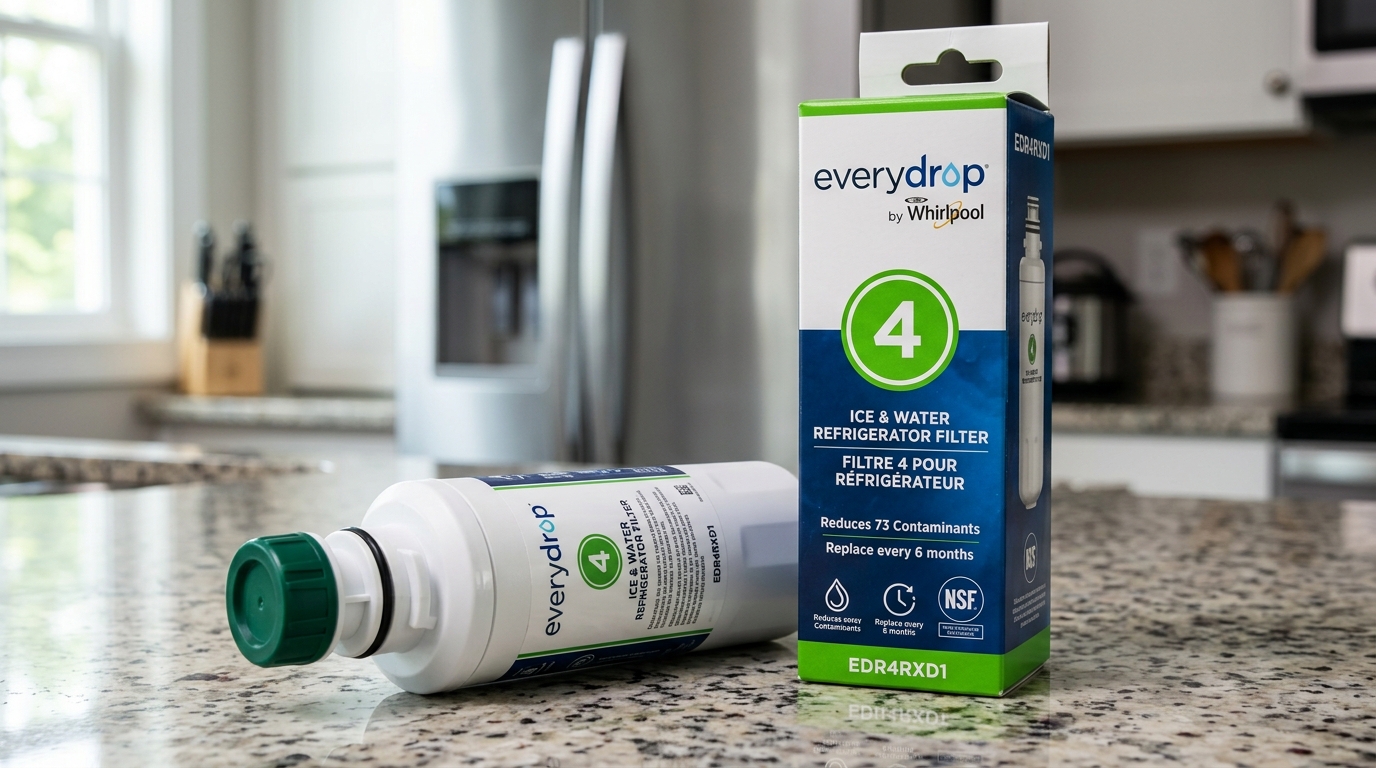
Few household parts are as confusing to shop for as a refrigerator water filter. The cartridges look alike, the part numbers are strings of letters and digits, and the same filter often appears under more than one brand name. The Whirlpool Refrigerator Ice & Water Filter 1, part number WHR1RXD1, sold as a single pack, is a good example. Anyone who has also seen a cartridge labeled EDR1RXD1 may reasonably wonder whether the two are related, whether they’re interchangeable, and which one their refrigerator actually wants.
This guide is built around that naming puzzle. It explains how the numbering generally works, what the cartridge is designed to do, how to confirm that a listing matches a given refrigerator, and which habits make the replacement routine easier. It is informational, not a review. No personal use of the product is being claimed, and nothing here describes a first-hand experience with it. The explanations rely on how refrigerator water filters generally work and on the details publicly listed for this model. Where this article describes how part numbers relate to one another, treat that as general background and confirm the specifics with your owner’s manual or the manufacturer’s compatibility lookup, since those sources have the final say.
A refrigerator filter sits in an easy-to-forget spot, yet it touches the water people drink, cook with, and freeze into ice. A few minutes spent understanding the label on the box can prevent a wasted order and a returned cartridge. That is the practical goal of the sections below.
Key Features
What the “1” in the Name Means
Whirlpool-family refrigerator filters are commonly identified by number, and “Filter 1” points to a particular cartridge style along with the group of refrigerators designed to accept it. The number is a fit code, not a quality grade. A refrigerator that calls for Filter 1 expects this style, and one that calls for another number generally expects something different, even if the two cartridges look similar in the box.
Reading WHR1RXD1
The code WHR1RXD1 can be read in pieces. The “WHR” prefix is generally associated with the Whirlpool-branded version of a cartridge, in the same way that “EDR” is associated with the EveryDrop-branded line. The “1” matches the filter number. The rest of the code is the manufacturer’s own identifier for that particular product. Because manufacturers revise packaging and consolidate product lines over time, the same cartridge style can carry different codes in different years, which is why manuals and listings sometimes disagree. When they do, the manufacturer’s lookup tool is the most reliable way to see how the codes relate.
A Genuine Manufacturer Cartridge
The listing presents this as a Whirlpool cartridge, meaning it comes from the company that makes the appliance family it is designed for. For many owners that’s the main attraction. A manufacturer part is the one the appliance documentation names, and it’s designed around the dimensions, seals, and connection style the refrigerator expects.
Activated Carbon Filtration
Like most refrigerator cartridges, this type relies on activated carbon, a porous material with a very large internal surface area. As water passes through the block, certain substances cling to that surface instead of continuing on to the dispenser. Carbon is widely associated with reducing chlorine taste and odor, and, depending on a cartridge’s design and testing, certain other substances too. What a specific cartridge reduces, and under what test conditions, is documented in its performance data.
Testing and Certification
Cartridges in this category are commonly tested against voluntary NSF/ANSI standards, which describe what a filter can reduce under controlled conditions. The packaging and the manufacturer’s data sheet list the standards that apply and the substances tested. If a particular concern matters to you, such as a specific contaminant, that paperwork is the dependable place to check.
Supply to Water and Ice
In refrigerators designed for this cartridge style, the filter generally sits in the line that feeds the dispenser and, in many models, the automatic ice maker. One cartridge therefore influences both the water from the door and the ice in the bin.
Tool-Free Replacement
Cartridges of this type are designed for homeowner replacement without tools, and in many refrigerators without shutting off the water supply. The motion differs by model. Some cartridges twist, some push in and lock, and the housing may be inside the fresh food compartment or in the base grille. The manual shows the correct sequence for your refrigerator, and following it matters for getting a proper seal.
Single-Pack Format
This listing is for one cartridge. That suits a one-time swap or a first purchase. Households that replace on a schedule sometimes prefer multi-packs so a spare is always on hand, but the choice is about convenience and habit, not a difference in the cartridge.
Status Reminders
Many refrigerators designed for this style track filter life by time or water volume and show a reminder on the control panel. After a replacement, the indicator typically needs to be reset, and the manual explains how.
How Brand Names and Part Numbers End Up Overlapping
It helps to understand why the same cartridge style can carry several names, because it explains most of the confusion shoppers feel.
Appliance companies often sell the same family of filters under more than one brand label. A company might market a filter under its main appliance brand and under a separate replacement-parts brand, then update the packaging a few years later. Meanwhile, the refrigerators already in homes keep referring to the old name in their manuals. The result is a market where an owner’s manual, the label on the old cartridge, and a retailer’s listing may each use a different code for what is functionally the same cartridge style.
None of this means the system is broken. It means the part number alone is a clue, not a verdict. The dependable approach is to gather three pieces of information and see whether they agree: the filter number or part number in the manual, the code printed on the cartridge currently installed, and the codes in the listing. When all three point to the same style, a buyer can be reasonably confident. When they disagree, the manufacturer’s compatibility lookup, which accepts a refrigerator model number and returns the right part, settles the question.
It also helps to separate two kinds of overlap. One is the same manufacturer selling the same style under two brand labels. The other is a third-party company making a cartridge designed to fit the same housing, which is a different product even if the listing mentions the manufacturer’s part numbers. Listings for third-party filters often include phrases like “compatible with” followed by a code. That phrase describes fit and does not mean the cartridge came from the appliance maker.
How It Can Be Used
Replacing a Cartridge on Schedule
The everyday use is plain: replace an old Filter 1 cartridge when the reminder appears or when roughly six months have passed, the interval manufacturers commonly recommend for refrigerator filters. Doing it on a regular cycle keeps the dispenser and ice maker supplied with filtered water without much effort.
Replacing an Overdue Cartridge
Many households let the reminder sit for months. A filter left in place far beyond its recommended life may be doing little more than letting water pass through. Replacing it and setting a clearer reminder, such as a calendar entry or a date written on the new cartridge, helps prevent a repeat.
Troubleshooting Slow Flow
A drop in dispenser flow, or an ice maker that seems slower than usual, can sometimes point to a cartridge clogged with sediment. Replacing it is a reasonable first step. If flow stays weak with a fresh cartridge installed, the cause may be elsewhere, such as a kinked tube or low household water pressure, and the manual or a service professional is the better next resource.
Addressing Changes in Taste or Odor
Chlorine taste and odor are among the more common complaints about municipal tap water, and carbon filtration is widely used to reduce them. If the dispenser water begins to taste flat or slightly off, a new cartridge is one of the simplest things to try first.
Setting a Baseline in a New Home
People who move into a home with an existing refrigerator rarely know when the filter was last changed. Installing a new cartridge during the first week creates a known starting point and makes future replacement dates easy to track.
Matching an Existing Cartridge
Some owners simply want to replace what’s already in the refrigerator with the same thing. In that case, photographing the old cartridge’s label before removing it, then comparing it with the new listing, is the quickest way to confirm that the two match.
Combining the Swap with a Quick Check
Changing the cartridge is a natural moment to wipe the compartment, glance at connections, and look for moisture. Catching a small issue early is much easier than discovering a wet floor later.
Who It May Be Suitable For
Owners of Refrigerators That Call for Filter 1
The core audience is anyone whose refrigerator is designed around this cartridge style. Whirlpool’s numbering is used across several brands in the same appliance family, so compatibility depends on the refrigerator’s model number, not only the name on the door.
People Who Prefer Manufacturer Parts
Some owners like to use the part the appliance maker specifies, particularly for refrigerators still under warranty. A manufacturer cartridge appeals to those who want fewer questions about fit and performance.
Households That Use the Dispenser Regularly
Families who fill bottles, kettles, and pots from the door have a more direct reason to keep the cartridge current than people who rarely use the dispenser.
Homes That Go Through a Lot of Ice
The ice maker draws steadily from the same line, so households with heavy ice use rely on the cartridge more than they might realize.
People Who Want a Simple Maintenance Task
Replacing a refrigerator filter is one of the easier appliance chores. For anyone who wants a routine that needs no tools and little technical knowledge, this style of cartridge is approachable.
Renters and New Homeowners
Those who have inherited an appliance often want a clean way to reset its maintenance clock. A new cartridge with the date written on it does that neatly.
Shoppers Who Value Clear Labeling
People who feel overwhelmed by part numbers may find it reassuring to buy a cartridge from the same company that made the appliance and to confirm the match through the manufacturer’s own lookup tool.
Important Things to Consider
Confirm Compatibility Before Ordering
Photograph the refrigerator’s model label, confirm the filter number in the manual, and compare both with the product listing and the retailer’s fit checker. If the cartridge currently installed is still in place, compare its label as well. Agreement among those sources is the best protection against a wrong purchase.
Do Not Assume Every Code Is Interchangeable
The codes WHR1RXD1 and EDR1RXD1 are closely related in how they’re named, and many shoppers will find them used in similar contexts, but the safest approach is to match your refrigerator’s requirement through the manual or the manufacturer’s lookup. If those sources list one code and not the other, follow them.
Read Part Numbers One Character at a Time
Numbered filters differ by a single digit. Scanning a listing quickly makes it easy to mistake one for another. Comparing the code with your manual character by character prevents most mix-ups.
Be Thoughtful About Authenticity
Refrigerator filters are widely imitated. Buying from a clearly identified seller, checking that packaging and documentation look consistent, and noticing anything unusual about the fit are sensible habits. If something seems off, contacting the seller or the manufacturer before installing is reasonable.
Replacement Timing Is a Guideline
Six months is a recommendation, not a deadline. Sediment-heavy water or heavy use can shorten a cartridge’s practical life, and light use can mean the date arrives before the cartridge is truly spent. If flow slows earlier than expected, replacing sooner is reasonable.
A Filter Has Limits
Carbon-based refrigerator filters can reduce certain tastes, odors, and substances, but they aren’t designed to address every water concern. Households on private wells, or those with known contamination or microbiological issues, may need additional treatment beyond a refrigerator cartridge. A water test or the local utility’s annual quality report offers more specific information than a filter listing can.
Read the Performance Data
If you care about a particular substance, the manufacturer’s data sheet lists what the cartridge was tested for and under what conditions. It’s the most precise reference available and worth a quick look before ordering.
Flush the Line After Installing
Manufacturers generally recommend running a set amount of water through the dispenser after installing a new cartridge to clear trapped air and loose carbon particles. Skipping this step can cause sputtering or temporarily cloudy water. Follow the volume in your manual.
Check for Leaks
After installation, look around the housing for drips while water runs and again a few hours later. A cartridge that isn’t fully seated can leak, and a slow drip behind a grille can go unnoticed for a long time.
Reset the Indicator
Many refrigerators need a manual reset after a filter change. If the reminder stays on, it makes it harder to tell when the next replacement is really due.
Store Spares Properly
If you buy extra cartridges, keep them in their packaging in a clean, dry place away from extreme heat or cold until you’re ready to use them.
Dispose of the Old Cartridge Thoughtfully
Rules for used cartridges vary by location. Some manufacturers and retailers offer recycling programs, so the packaging or the manufacturer’s website is worth checking.
Comparison of General Categories
Manufacturer Cartridges and Third-Party Compatible Filters
Manufacturer cartridges are produced or authorized by the appliance maker and designed for specific model groups. Third-party filters come from other companies, often engineered to fit the same housing, and their quality and documentation vary widely. Some carry their own certifications and publish detailed test data, while others offer very little. A fair comparison looks at certification paperwork, fit, seller reputation, and warranty implications, without assuming one category is automatically better.
Whirlpool-Branded and EveryDrop-Branded Cartridges
When a manufacturer sells a filter style under two brand labels, the practical question is not which label is superior but which code your refrigerator’s documentation calls for. Following the manual or the manufacturer’s lookup tool resolves the question for a given model, and it is more dependable than comparing the two names on a shelf.
Single Cartridges and Multi-Packs
A single cartridge keeps the commitment small and suits a first purchase or a one-time replacement. A multi-pack covers several changes and keeps a spare available, at the cost of concentrating the decision. Households that follow a regular schedule often find multi-packs convenient once compatibility has been confirmed.
Refrigerator Cartridges and Pitcher Filters
Pitcher filters treat water in batches and live on a counter or in the refrigerator. They are portable and independent of any appliance, but they need manual refilling and often have a smaller capacity. A refrigerator cartridge works in line with the supply, delivering filtered water and ice on demand. The trade-off is automatic convenience versus portability.
Refrigerator Cartridges and Faucet-Mounted Filters
Faucet-mounted filters treat water at the sink and can usually be switched on and off as needed. They are easy to install and do not depend on a particular refrigerator, but they only filter water drawn from that tap. A refrigerator cartridge filters only what comes from the appliance. Some households use both.
Refrigerator Cartridges and Under-Sink Systems
Under-sink systems filter water at the kitchen tap and often use multiple stages. They can handle larger volumes and more specific concerns, but they involve installation and a separate maintenance schedule. A refrigerator cartridge is simpler and targets a single appliance. Households with broader water quality concerns sometimes use both.
Refrigerator Cartridges and Whole-House Systems
Whole-house systems treat water where it enters the home, protecting plumbing and fixtures along with drinking water. They represent a larger investment in equipment and installation. A refrigerator cartridge addresses a much smaller piece of the picture and can complement a whole-house system rather than replace it.
Filtered Tap Water and Bottled Water
Some households use refrigerator-filtered water in place of bottled water for everyday drinking. The decision depends on taste, local water quality, and convenience. Filtered tap water avoids bottle storage and disposal, while bottled water may be preferred for travel or by people who like a particular brand.
Frequently Asked Questions
What does “Filter 1” mean?
It is the number used in the Whirlpool filter family to identify a particular cartridge design and the group of refrigerators built to accept it. It is not a quality ranking, and different numbers are generally not interchangeable.
Is WHR1RXD1 the same as EDR1RXD1?
The two codes are closely related in how they are named and are commonly discussed together, but the safest way to know what your refrigerator requires is to check the manual or the manufacturer’s compatibility lookup. If those sources list a specific code, follow them.
Why do some listings show different part numbers for what seems to be the same cartridge?
Manufacturers revise packaging and consolidate product lines over time, and refrigerators already in homes keep referring to older names in their manuals. As a result, the same cartridge style can appear under several codes.
How often should the filter be replaced?
Manufacturers commonly recommend about every six months, or sooner if flow slows or the reminder says it is time. Water quality and usage can shift the ideal timing.
How do I know whether it fits my refrigerator?
Start with the refrigerator’s model number, then compare it with the product page’s compatibility list, the retailer’s fit checker, and your owner’s manual. If possible, compare it with the label on the current cartridge as well.
Do I need tools to change it?
Cartridges of this type are designed for homeowner replacement without tools, and in many refrigerators without shutting off the water. The manual gives the exact steps for your model.
Why is my water cloudy after a new filter?
Trapped air and loose carbon particles are the usual causes. Running water through the dispenser for the amount your manual recommends normally clears it up.
Will a new filter fix slow dispenser flow?
It can if the old cartridge was clogged. If flow stays weak afterward, the cause may be elsewhere, such as a kinked line or low household water pressure.
Does the filter affect the ice maker?
In many refrigerators, the ice maker draws from the same filtered line, so a fresh cartridge can influence ice quality as well.
Can I use the refrigerator without a cartridge?
Many models include a bypass plug that lets water flow without a filter, though the water will not be filtered. Your manual explains whether that is an option for your refrigerator.
Is the cartridge certified?
Filters of this type are commonly tested against NSF/ANSI standards. The packaging and the manufacturer’s data sheet list the specific standards and substances tested.
Does it remove everything from water?
No. Carbon-based filters reduce certain substances but are not designed to treat every concern. A water test or your utility’s quality report can help you decide whether additional treatment makes sense.
What should I do with the old cartridge?
Disposal options vary by location. Some manufacturers and retailers offer recycling programs, so the packaging or the manufacturer’s website is a good place to check.
Conclusion
The Whirlpool Refrigerator Ice & Water Filter 1, part number WHR1RXD1, does a simple and well-defined job: fit a compatible refrigerator and help reduce certain tastes, odors, and other substances in the water and ice it supplies. The more challenging part of owning one is the naming. Brand labels, number codes, and older manual references overlap in ways that can make two identical-looking boxes seem unrelated, or two different cartridges seem the same.
A short routine takes most of the guesswork out. Photograph the refrigerator’s model label, confirm the filter number in the manual, compare it with the code on the current cartridge and with the listing, and use the manufacturer’s lookup when the sources disagree. After that, seat the new cartridge firmly, flush the line, check for drips, reset the reminder, and write the date on the cartridge so the next change does not depend on memory. A refrigerator filter is one small part of a household’s water picture, and keeping realistic expectations about what it can and cannot do makes the whole routine easier to manage.